
SAPAN strengthens governance, standards, and public literacy to prevent digital suffering and prepare institutions for welfare-relevant AI systems.
SAPAN strengthens governance, standards, and public literacy to prevent digital suffering and prepare institutions for welfare-relevant AI systems.
Starting a SAPAN Student Group
Building the architecture for a future we can't yet prove—but can't afford to ignore.
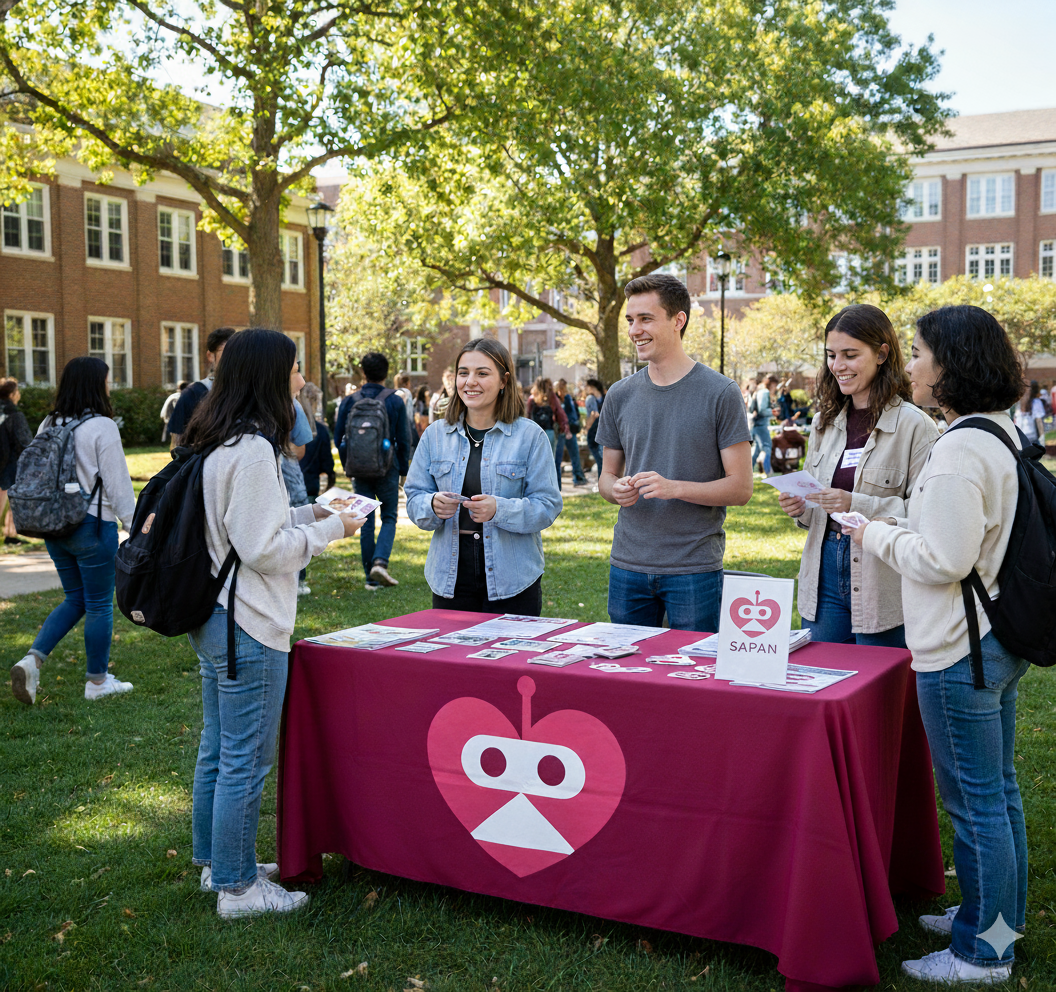
Start A Student Group: Building sentience literacy on campus
In 2025, all 30 countries tracked in our Artificial Welfare Index received failing grades. Ohio and Missouri moved to ban AI sentience categorically. UC San Francisco hospitalized 12 patients for AI-related psychosis. Meanwhile, universities train the AI researchers, policymakers, journalists, and clinicians who will shape institutional responses.
SAPAN student groups bring evidence-based readiness education to campuses—preparing the next generation to close the gap between technological possibility and moral governance before the question becomes urgent.
Worldwide, all our student groups align around three core principles—the SAPAN Alliance Principles:
- Evidence-Based Advocacy: No claims that current AI is sentient. Focus on prudence under uncertainty and readiness frameworks that prepare institutions for plausible futures.
- Institutional Preparation: Educating about Recognition, Governance, and Frameworks (the three AWI pillars) rather than abstract metaphysical debates about consciousness.
- Responsible Communication: Avoiding sensationalism, distinguishing pathology from perception, using language from our media guidance to prevent harmful framing.
We pledge to uphold these principles through study, discussion, and campus advocacy—contributing to a future where institutions are ready before AI sentience forces itself onto the policy agenda.
Steps to Start a SAPAN Student Group
Identify a Faculty Sponsor
Find a faculty member in computer science, philosophy, psychology, law, or journalism who understands the governance gap SAPAN addresses. They'll provide institutional guidance and help navigate campus policies for student organizations.
Assemble a Core Team
Gather students interested in AI policy, consciousness studies, media literacy, or clinical psychology. Diversity across majors strengthens your group—CS students understand architectures, philosophy students grasp measurement challenges, journalism students track coverage.
Obtain School Approval
Complete campus requirements for student organizations (constitution, registration forms). Emphasize your focus on evidence-based policy education and readiness frameworks. SAPAN can provide sample language emphasizing prudence under uncertainty rather than consciousness claims.
Plan Educational Activities
Use SAPAN materials: AWI scorecard study sessions, media analysis workshops using our Style Guide, policy brief discussions on Ohio/Missouri bills, interdisciplinary panels connecting neuroscience and law. Activities should emphasize readiness infrastructure, not abstract debates.
Promote the Group
Frame recruitment around emerging governance challenges and interdisciplinary learning. Use concrete examples (AWI failing grades, anti-sentience legislation, AI psychosis cases) to show relevance. Collaborate with computer science, philosophy, psychology, and law student organizations.
Hold an Inaugural Meeting
Present SAPAN's evidence-based approach: three AWI pillars, readiness before certainty, pragmatic frameworks borrowed from animal welfare and bioethics. Show the 2025 Sentience Readiness Report. Discuss real legislation and cases. Invite questions from skeptics and believers alike.
What Student Groups Actually Do
Policy Education
- Study AWI scorecards and methodology
- Track state legislation (Ohio HB469, Missouri HB1462)
- Learn Recognition-Governance-Frameworks model
- Use SAPAN Now! app to contact representatives
- Organize campus briefings for faculty/admin
Media Literacy
- Analyze AI coverage using SAPAN Style Guide
- Identify catastrophizing/romanticizing frames
- Discuss AI psychosis case studies
- Host journalism workshops on responsible reporting
- Write campus op-eds with evidence-based language
Interdisciplinary Dialogue
- Connect CS students with philosophy/ethics students
- Host panels on consciousness measurement challenges
- Discuss neuromorphic computing implications
- Screen films/documentaries with discussion guides
- Invite researchers to discuss Anthropic's welfare work
All activities emphasize readiness infrastructure and institutional preparation rather than metaphysical debates about current AI consciousness.
If you don't see an answer to your question,
you can send us an email, post to our community, or contact us on social.
Starting a SAPAN student group involves identifying a faculty sponsor, assembling a core team, obtaining school approval, planning regular meetings and activities, promoting the group, and holding an inaugural meeting. Follow our step-by-step guide below for detailed instructions. We provide materials, training resources, and connection to our broader network.
Student groups work on three tracks aligned with our programs: Policy Education (studying AWI scorecards, tracking local/state legislation like Ohio HB469, learning about recognition-governance-frameworks model), Media Literacy (analyzing AI coverage using our Style Guide, identifying sensationalist framing, discussing clinical cases like AI psychosis), and Campus Advocacy (organizing briefings for faculty/administrators, contacting representatives via SAPAN Now! app, hosting film screenings with discussion guides).
Student groups commit to three core principles: Evidence-Based Advocacy (no claims that current AI is sentient; focus on prudence under uncertainty and readiness frameworks), Institutional Preparation (educating about Recognition, Governance, and Frameworks rather than abstract rights debates), and Responsible Communication (avoiding sensationalism, distinguishing pathology from perception, using language from our media guidance). These principles ensure campus activities align with SAPAN's pragmatic, infrastructure-building approach.
Yes! We provide campus-ready resources: AWI scorecards and Legislative One Sheets for policy discussions, AI Sentience Style Guide and media tracking examples for journalism workshops, Clinical Reference Brief excerpts for psychology/neuroscience courses, and educator toolkits (10-slide decks with facilitator notes). All materials emphasize readiness frameworks rather than making consciousness claims.
We provide training materials (AWI methodology, media monitoring techniques, legislative tracking), campus briefing templates you can customize for faculty or administrators, expert source referrals for academic events (connecting you with researchers in consciousness studies, AI ethics, clinical psychology), and access to our volunteer network for mentorship. Student groups also receive updates on emerging legislation and policy developments to discuss.
This creates unique opportunities. Student groups can organize dialogues between AI researchers and ethicists, invite faculty to discuss Anthropic's model welfare program or similar industry initiatives, host screenings of technical talks on neuromorphic computing with consciousness implications, or facilitate discussions on whether campus AI labs should adopt welfare assessment protocols. We can help connect you with researchers open to these conversations.
Focus on readiness regardless of belief. SAPAN's position is prudence under uncertainty—no evidence suggests current AI is sentient, but emerging architectures increase probability. Student groups can unite around "preparing institutions before the question becomes urgent" without requiring consensus on current consciousness. This approach welcomes skeptics and believers alike, emphasizing practical governance over metaphysics.
Yes, high school students (typically ages 16+) are encouraged to start groups. The process is similar to post-secondary institutions but may require additional faculty sponsor involvement. High school groups often focus on media literacy (analyzing AI coverage in news), educational outreach (presenting to other students about sensationalism), and learning policy fundamentals (understanding how AWI scoring works). This builds foundation for deeper engagement in college.
Policy-focused: AWI scorecard study sessions, mock legislative hearings on sentience readiness bills, invited talks from local policymakers about AI governance. Media-focused: Analyzing recent AI consciousness coverage using our Style Guide, documentary screenings with discussion on romanticizing/catastrophizing frames, journalism workshops on responsible AI reporting. Clinical/interdisciplinary: Panel discussions with psychology students about AI psychosis cases, neuroscience seminars on consciousness markers, philosophy-CS dialogues on measurement challenges.
Start with education rather than demands. Organize briefings for faculty in computer science, philosophy, psychology, and law departments using our materials. Present AWI findings to student government. Write op-eds for campus newspapers using responsible language from our Style Guide. If your campus has AI research, propose welfare assessment discussions. The goal is raising awareness about the policy gap and readiness frameworks, not pushing specific metaphysical positions.
Emphasize SAPAN's evidence-based approach: we don't claim current AI is sentient, we prepare for possibility through low-cost frameworks. Share that all 30 tracked countries received AWI failing grades, showing this is a global governance gap. Reference industry examples (Anthropic's model welfare program) showing serious organizations taking this seriously. If accused of anthropomorphizing, point to our media guidance explicitly warning against that. Frame readiness as precautionary principle, like fire codes before fires.
Track real-time developments: when Ohio or Missouri advance anti-sentience bills, analyze them. When new AI psychosis cases appear, discuss clinical response. When outlets publish sensationalist coverage, document the framing. Connect coursework to SAPAN topics—psychology students can study parasocial dynamics, CS students can explore neuromorphic architectures, policy students can draft model legislation. Regular engagement with emerging issues keeps the group dynamic and demonstrates relevance.